Film Opening Summaries and Comments

 Hi everyone!

This week, we are officially starting our film openings and brainstorming. My teacher told my class to look at these 9 film openings, so I will be summarizing and commenting on them down below:

Rise

This film opening is sports related, and it starts with a teenage boy exiting his car and opening the car door, and there is soccer equipment inside of it that he grabs. The credits are shown with unique and engaging music as he exits the car and moves towards the soccer field. I enjoyed the vibrant colors that was probably achieved by a filter, and I want to implement this into my own film opening. The font used during the credits is also enjoyable as it seems professionally done. The boy begins to play soccer and there are zooms used to show his movement as well as to show what equipment he throws down before her plays. Following this, another boy is shown exiting his car, and the camera follows him as he walks on the sidewalk. Eventually, he meets a fence while looking at the soccer-playing boy, and the soccer boy is shown again playing soccer as the music gets louder. Various cuts are used to show the soccer playing. Then, as the soccer-playing boy walks back to the car, he sees the other boy. Close ups show their faces as the camera cuts between both of them.


Offline

This opening starts with a typewriter-styled title sequence showing the studios and the companies that helped produce the movie. Then, as eerie music plays, a dark hooded person scrolling through the Instagram page of a girl. Eerie music plays. Then, this cuts to a shot of a girl laying tied up inside of a cage with a rag inside her mouth. There are several shots that fade between the "stalker" and the tied-up girl. Then, the once-unconscious girl begins to wake up and starts screaming and shaking as she realizes where she is. After this, the title "Offline" is shown in a typewriter style.


Dear Lover

This film opening is much calmer than the previous one, as it starts off with rather relaxing shots of nature. The credits appear at the bottom of the screen and tranquil music plays while this happens. Then, a girl is shown sitting by the water with the title "Dear Lover" appearing on the screen. A fade to black is used as the girl starts speaking in a voice-over. Then a close up shot shows the girl wiping tears. This cuts to more shots of nature but then goes to a shot of the girl talking to an unseen person. As the girl continues to speak about her situation and why she isn't able to stay with her girlfriend Luna, there are shots of various moments that she and Luna have experienced. What's unique about this is the white, muted filter that is used to show that these moments are from the past rather than the present. The pair is shown sitting by the water, holding hands, and getting close. After this, it cuts to various shots showing the letter-writing and mailing process that the two girls use to communicate with each other. Luna is then seen writing back after receiving the letter. Then to end the opening, the girl says "No, I'm getting ahead of myself, let's start from the beginning" and leaves the audience to speculate what will happen later in the film. 


Dare to Thrill

This film opening starts with the logo, and then there is a group of friends laughing with text shown on the screen revealing a "dare" that they have to attempt. Then, an extreme wide shot shows the friends walking up a parking garage while the options "Dare or Lose it all" is is shown on screen in a very unique pixelated font. The "Dare" blinks, indicating that the teens have chosen this option. They walk up the stairs and the camera pans and moves around, making it feel like the audience is actually there with them. The group is then seen entering a car and the energetic EDM music drops while sound effects emphasize the tires screeching and the friends screaming with excitement. Thrilling shots of the car driving on the highway is shown. However, things take a turn when the car is off the highway and drives over a speed bump in a parking lot. Here, a thud is heard and one person turns the music down. Things go silent, fade to black, and then a shot of the friends opening a car trunk and reacting in a scared manner is shown from a low angle. Finally, the "directed by" is shown and the title "Dare to Thrill" is shown in a pixelated font.

Always Watching 

In this film opening, the title, production company, and directors are shown on a black screen in a red font. Then there is a two-shot of a boy and a girl in what appears to be a therapy session. Credits continue appearing on the bottom of the screen. They discuss the boy's apparent obsession with another boy's life and the boy is seen getting angry. After this, there is a bright and colorful shot showing this boy and another boy with glasses walking cross a street directly towards the camera. After, there is a mysterious shot of the original boy being alone and staring directly at the camera in a close up. Ominous music plays while the next shot shows an over-the-shoulder shot of the boy staring at the boy with glasses that is now walking away. Then, several shots cut between the therapy session rant and the boy walking around in darkness. The boy gets angry and stands up while the therapist tries calming him down. Then, more ominous music plays while the boy with glasses enters his house and walks towards a room. The stalker boy then follows him down that path. After another cut to the therapy session, there is a shot of the boy staring with a sinister smile, and the he tapes the mouth of the boy with glasses. This back-and-forth cutting continues, and then a unique jump cut occurs in which the glasses boy looks in the mirror, but it switches between him and the stalker boy very rapidly. The boy keeps getting very angry in the therapy session, and there are more cuts in between the therapy and stalker-like shots. The last thing that happens is the therapist asking the boy to tell his story again from the beginning, leaving the audience curious for what will happen next.

Blue Boar

This film opening begins with a medium close up shot of a girl walking in a blue dress that looks like it's from colonial times. Mystical music plays, and an elderly woman is seen talking to her in a mix of voice overs of the girl and extreme close ups of the elderly woman's bottom half of her face. The girl walks around after this, and the music plays while shots of the sun, the girl's feet, and the the girl walking around are shown while credits roll. Then, an extreme close up of the girl's eyes is shown while the music reveals its lyrics. It appears to be an original song, or at least one that the girl is actually singing. With more shots of nature and the girl looking around it, the girl is then shown singing to the petal that she's picked. She then unwraps her hair and smiles while doing so. More shots of the girl singing in the outdoors happens. A shot shows her playing with another flower, and then a close up shows her face singing directly to the camera. She proceeds to craft something out of the branches and leaves, and a shot displaying an overlay drawing of a boar shows what it's supposed to be. Then the overlay remains while the rest of the nature disappears. The words "Blue Boar" is shown inside of this boar, indicating that this is the film's logo.

White Coat

This opening begins with different dark shots showing the credits. Eerie scary music plays while a boy with a mask is shown. Then, some boy's legs are shown tied together and other shots of rope and a face is shown. There is no dialogue throughout any of this. The boy is then seen trying to escape from being tied. Quickly, a man with a mask and glasses is shown. The boy then appears to break free from the restraints and the masked man pours liquid to a glass. The eerie music continues while more dark shots play very quickly. The man appears to be a scientist and he fiddles with different vials and lab equipment. After, a paper is shown showing "Patient #0534", hinting that the boy in restraints is part of some experiment, or at least some doctor's patient. More liquid gets poured into glass, and the restrained boy opens a box and looks towards the camera with a serious glance. Then, the title "Black Coat" is shown on the screen with a black background.


Stalker

This film opening begins with a shot of a girl in bed shutting off an alarm and leaving her bed. The credits are shown on the bottom of the screen. The girl then opens her window, and then it cuts to her brushing her hair in front of a mirror. Camera sounds play, and eerie music plays after. The girl turns around after hearing this. A shot of the window is shown, and the girl is shown looking back. Them, the title "Stalker" is shown over a black screen. A high angle of the girl, now in another location is used to show her opening her school folder. Then a medium-close shot is used to show her opening a paper. As she reads the paper, she looks up with a scared face and suspenseful music plays. She quickly runs out of the school, and enters a car. A point of view shot of her trying and failing to start her car is then used. After this, more suspenseful music plays as the camera shows her facial reaction to the camera, suggesting that there is something behind it.

Nostalgia

This film opening starts with a "Valle productions" logo. Then, a shot of a tree that pans to the sky is shown, with the title "Nostalgia", the writers, and directors on it. Piano music plays as various shots go back-and-forth between different paintings of landscapes and shots of an elderly lady. With these paintings, the camera pans and tilts. The lady is then seen grabbing branches of a bush, and holding her chest. Then, there is a overhead shot of a table with different pictures and religious items that the elderly woman's hand touches. Then, a shot of flowers is used. After, a shot of a family portrait is used that the camera moves away from. Following this, another medium close up shot of the elderly woman is shown, and this time she smiles. This jump cuts into a much younger girl with the same outfit, probably indicating that this was the elderly woman when she was younger. This shot of the young girl tilts up and pans to the right into the sky, and that is how the opening scene ends. 

Conclusion

After watching all these opening scenes, I have several thoughts. First, I definitely want to take time in finding a good font to use for the credits, since this can definitely enhance the quality of my group's opening scene. Also, I want to use filters in order to make my group's opening scene seem more professional. I noticed that sound completely changed the atmosphere of certain opening scenes, so I hope we find good songs to tell our story in the best way possible. Furthermore, I want to make sure that if my group decides on having dialogue, that the actors are good. The delivery of the dialogue must be good or else I wouldn't want it. I also noticed how some opening scenes reveal little of the plot; they just establish the setting and characters. I hope my group does something like this as well, since after all, this is just an opening scene and not the entire film.


That's all for todayπŸ˜†

Mediamel out!

Opening Scenes


 Hi again!

My teacher assigned my class the task of discussing the opening scenes of movies of our choice, specifically movies with the genres of our own future opening scene. I've never really paid attention to the opening scenes in movies, so this experience was definitely new. My group opening scene's genre is a mixture of romance/drama/indie, so I selected movies with these genres.

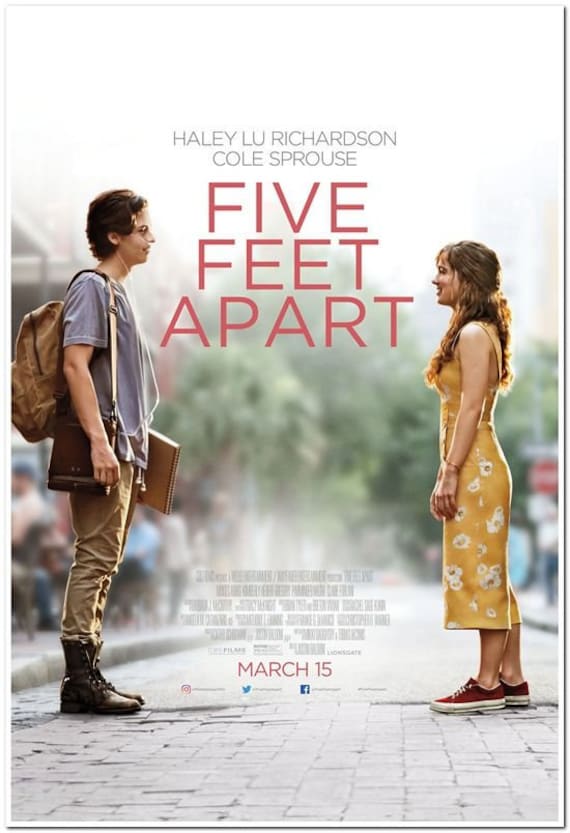
 The movies that I chose were: The Perks of Being a Wallflower, Lady Bird, and Five Feet Apart.


Movie 1: The Perks of Being a Wallflower

Genre: Romance/Drama

The Perks of Being a Wallflower. Dir. Stephen Chbosky. Summit Entertainment. 2011. Film

Amazon.com: (27x40) The Perks of Being a Wallflower Poster: Prints: Posters  & Prints

Cover To Credits: THE PERKS OF BEING A WALLFLOWER | Birth.Movies.Death.


First, I must admit that I have seen this movie before. However, there are many things in the opening scene that I have never really digested until now. When the movie started in its first few seconds, I noticed the "Summit Entertainment animation" logo animation. This is probably the first time I've actively remembered a film's distributor. Also, I noticed how the sound of typing began before any images appeared on the screen. The scene then continues to mention other companies like "a Mudd production", and then the shots of the movie finally appear.

To my surprise, there are no actual actors present in the title sequence. There is just one long continuous shot of the camera moving through an underground tunnel, as if it were a car, and this is where the credit words appear on the screen. The order goes as follows: actors > casting by > music by > music supervisor > costume designer > editor > production designer > director of photography > executive producers > producers > screenplay by/based on his book > directed by . All of this happens while the camera is pointed at the road behind while the car is moving down the tunnel.

Eventually, the next scene opens with a boy, Charlie, writing in what appears to be a letter. A non-diegetic voice over sound is used for pretty much the entire opening scene, starting with "Dear friend", and continuing with Charlie's hospitalization situation and how he is perceived by others because of it. These all provide various pieces of knowledge for the audience to pick up on. While this is happening, the camera cuts to several different areas in Charlie's school, and it makes it known that he is not a popular boy by any means. Whether it be in class, the cafeteria, or the hallway, the boy is seen alone and rejected by anyone he tries to attempt to be near. Dialogue is used to reinforce this idea, as seen by the fact that even his own sister won't allow him to sit with her in the cafeteria.

Side characters are also introduced in the opening scene, as a boy named Callahan is seen mocking a teacher before the class starts. The camera shows Charlie smiling at his jokes, and it hints a future friendship that will happen in the near future.

Movie 2: Lady Bird

Genre: Drama/Indie

Lady Bird. Dir. Greta Gerwig. A24. 2017. Film

Master Review: Lady Bird — photations | Movie posters, Iconic movie posters,  Movie poster wallThe Art of the Scene: Greta Gerwig Discusses The Opening of Lady Bird -  Awardsdaily - The Oscars, the Films and everything in between.

 This film starts with a logo animation of A24, the film distributor.  Then, it is followed by a dark screen with a written quote. After this, it is cut to a shot of a mother and her daughter in bed, and the sound of birds chirping is present. After this, this is cut to a new shot of the same two sitting and talking.

Following this, there is a car shot and music playing alongside an audiobook, but then the mother shuts the music off. The audiobook continues, and the film alternates between single medium close ups of the mother and daughter as they talk to each other about college locations. With dialogue, the time setting, 2002, is established as Lady Bird mentions it in conversation. The family financial situation is also introduced when the mother mentions how she can "barely afford" in-state college. With the mention of college, it can be inferred that Lady Bird is the age of a senior in high school. And finally, Lady Bird's real name, Christine, is revealed as her mother calls her that name verbally.

The mother and daughter's conversation escalates into an argument with them talking over each other, and it results in Lady Bird hopping out of the moving car. Instantly, the film cuts to an insert shot of Lady Bird's pink cast with non-diegetic happy music in the background, and this cast and music carries through the rest of the opening scene.

It is then revealed that Lady Bird goes to a Catholic school as the camera cuts to a shot displaying this church-like academic setting with crosses on the wall. The words "Lady Bird" appears in a white font over the display of the school's sitting area. Following this, the different credits are shown in the title sequence while the camera showcases the many different shots around the school with music playing in the background. These shots show different religious practices, classrooms, and rooms within the school, as well as briefly introduce other important characters like Kyle during communion.  This allows the audience to get familiar with Lady Bird's current life. The order of credits goes as follows: Actors > casting by > music supervisors > music by > costume designer > edited by > production designer  > director of photography > co-producers > executive producer > produced by > written and directed by.

I noticed how this order is very similar to The Perks of Being a Wallflower, so that was interesting.

Movie 3:  Five Feet Apart

Genre: Drama/Romance 

 Five Feet Apart. Dir. Justin Baldoni. CBS Films. 2019. Film


FIVE FEET APART 2019 original D/S 27X40 Movie Poster | Etsy 

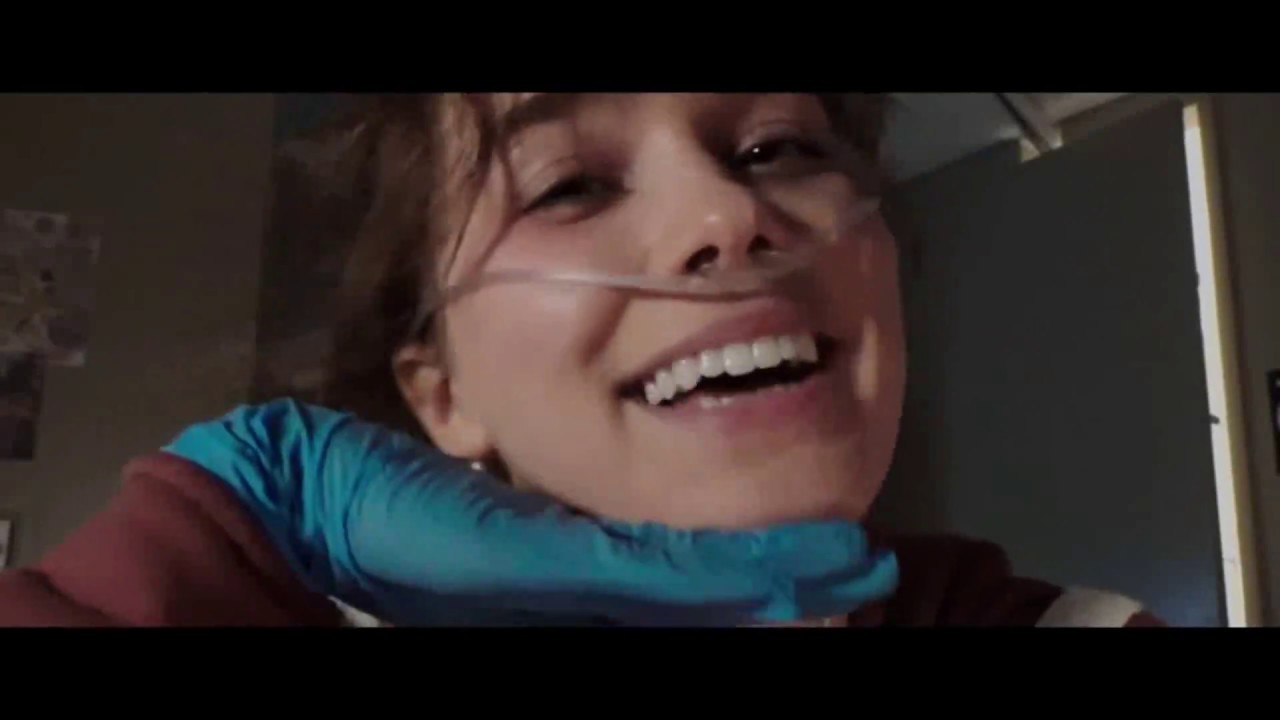
Five Feet Apart Trailer Song (Kygo ft. Miguel - Remind Me To Forget) -  YouTube 

This film starts with a Lionsgate logo animation, and then is followed by a CBS films logo animation. This film opens in a unique way, displaying many handheld shots of different families and friends laughing and having a good time. The shots are shaky and zoom in frequently, simulating the feeling of watching a home video. A non-diegetic voice over occurs during this montage, as a girl talks about touch and the importance of it. What catches the audience's attention are the few shots where people wear oxygen tubes, as this sparks the audience's curiosity due to its abnormality. There is also calming non-diegetic music playing in the background.

Then, the title "Five Feet Apart" is displayed on a black screen. After this, there is a shift to a more happy upbeat music while several shots of a room are displayed for the audience to see. There are shots of photos, a desk, and various items that help reveal the character's personality, even without words. Then, three girls are shown, with one holding a piece of clothing and commenting on it. The largest shot is a medium-full shot, so not much of the surroundings are visible at any given time. They continue talking about clothes and social things. It seems rather normal for teenage girls.

However, the conversation takes a turn when one of the girls says "I wish I could see that in person", and the smiles of the other two girls disappear. This results in the audience feeling even more curious as to what is going on with that girl. Then, the two girls eventually say goodbye to the third, and the third girl is left alone in her room. Her face appears rather sad through a close up shot of her face. Something shocking happens after: the film shifts to a wide shot, and the purpose of the room is revealed. Although the audience may have assumed that this room is the girl's bedroom, it is actually a well-decorated hospital room. This implies that this girl has to visit the hospital almost always, or perhaps she never leaves. The girl then puts on an oxygen tube, allowing the audience to connect this scene with the montage in the beginning.

While the audience is left forming many questions at a rapid pace, the film moves to a handheld shot of the girl recording herself, similar to the style of a video-diary. This makes the setting feel very personal. She talks to the camera for a while, and proves to have a good relationship with the nurses since she greets the nurse that enters by her name.

Although there are no credits given in the beginning of this film like the movies I discussed prior, they are given at the end. I briefly checked to see what order the names are in, and it does follow the general order of the two movies previously.


That's all for today. I hope you enjoyed this brief introduction to these films.

Mediamel out ✌ !


Beginning of Group Project: Brainstorming

Today marks the beginning of what will eventually be my group's opening scene. 

To start, I finally have my group members finalized, which is a huge relief. Start getting familiar with these names since you'll be seeing them for a while: Tori, Hannah, and Daniel :)

My group started by making a group chat to message each other with, and I named it "movie makers". From there, I asked if anyone had ideas and Daniel said he did. He introduced his idea, which is essentially a love triangle between two girls and one guy. There would be a guy who walks up to a girl's door, and basically apologize for cheating on her the summer prior. Then, the girl he cheated with would drive by and try to win him over, but he rejects her. He got his inspiration from various songs he's listened to, and I found this idea pretty interesting. However, I also slightly doubted how this would all fit into short, two-minute opening. I also wondered how this would be considered an opening scene, since it sounded like a general scene of a movie to me. I still liked the idea though!

As I thought about a love triangle myself, various ideas popped in my head at lightning speed. I thought of all the different shots and items to include, such as a trash can carrying a ripped photo of a couple, a teddy bear, and gifts. I imagined the girl getting ready while the camera focuses on different aspects of her room to understand her situation (a breakup) without words. Perhaps the ripped picture of the couple would show her dainty makeup and outfit choices, while the clothes she currently wears (darker clothes and makeup) displays the drastic change in her personality. Perhaps the boy's phone would display numerous missed calls and text messages from the girl he cheated on as she tries to flirt with him still. I suggested all of this to the group chat. 

On top of that, I sent various opening scenes of different movie/TV shows to show the different ways we could approach our scene. I really liked the opening scene of Riverdale, since it includes a voiceover summarizing the entire backstory with visuals to supplement it. This would work well with our idea. I also really liked Insatiable's opening scene, since it switches voiceovers between two characters in a unique way, providing a stable backstory as well. This would also work well with our idea, since we could possibly switch perspectives between the two or three main characters. I asked my group if they would rather switch from one characters' point of view as they're getting ready to the next, or if they would rather have each character getting ready at the same time, with the camera cutting-in numerous times between the different characters.

Tori replied, and she liked both ideas. Daniel said he liked the latter. Hannah, however, has not said anything in the group chat yet. I will be waiting for her opinion.

Although nothing is finalized yet, I'm happy with the progress we've made today. Starting is usually one of the hardest things to do, and we've managed to do it. Go us!


Update: Hannah ended up replying and said that she wanted to be the person who is behind the camera. She liked the overall idea as well

Mediamel out ❤

Storyboard Time

 Hello again!

A few days ago, I was assigned the task of making a storyboard for any movie clip. So, I chose one from the movie Twilight. It definitely took me longer than expected, but I'm pretty proud of how it turned out, especially for my first time. I decided to use a studio binder template for my storyboard. My artistic skills are definitely not the best, but I tried my best to give an accurate representation of the scene I chose. The checkboxes mark the type of camera shot, and there are additional notes indicating shot number, zooms, lighting, movement, and transitions.

 I hope you enjoy ☺

*** Not every box has a description since I included multiple drawings of the same shot***

The scene: https://www.youtube.com/watch?v=oXMUkgWoMlQ

The storyboard:


Mediamel out ❤πŸ§›πŸΊπŸŒ²

Legally Blonde Film Analysis

Legally Blonde is a popular romantic comedy film that features a young college student named Elle Woods in her journey to win her ex-boyfriend back, going as far as getting into Harvard Law School to do so. Elle, bubbly and hopeful, soon meets the reality of Harvard, and must work hard to prove herself amid everyone else underestimating her because of her looks. She starts off as a boy-crazy determined ex, but eventually develops into an excellent lawyer that beats all odds. Mise-en-scene in this film is both recognized and adored in this lovable, iconic 2000s movie.


To start off, the setting in this film allows the audience to be immersed into a preppy and girly style from the very beginning. The film opens off with various shots of a sorority house, decorated in every shade of pink. Its grand size is highlighted with high angle shots of the floor below, implying that the people who live there are quite wealthy. The specific font used in the opening credits are also pink, with a curly font to indicate this film’s daintiness and lightheartedness. The homecoming queen sash displayed on the wall also conveys a sense of popularity, even without any dialogue. While all this may imply lightheartedness for the west coast locations, the east coast provides a clear contrast. Harvard is shown to be rather dull in colors, with its browns and greys suggesting a more serious kind of prestige. The library, classrooms, courtroom, and outdoor areas all share these similar qualities. This allows for a change in mood, from a more playful feeling into a more solemn one. As Elle is forced to adjust to this switch to an unfamiliar location, the audience may empathize with the hardships of change as they are also forced to adjust to the familiar pink to a foreign brown. It is subtle changes like these that help the movie progress and share the message it is intending to, but without being explicitly obvious.


In addition, the lighting also enhances the movie by indicating specific moods at different times in the film. For instance, most of the film’s most famous scenes are shot with high-key lighting. This can be seen in the “Bend and Snap” scene, suggesting the flirtatious side to the women in the salon; the video essay to Harvard scene, suggesting Elle’s love of having fun; the entrance to Harvard scene, suggesting Elle’s excitement for her new school, and many more scenes throughout the film.This would be expected, considering that this film is a romantic comedy that tries to maintain a mostly light and cheery atmosphere. However, this does not mean that the darker shot scenes are any less important. During a time of seriousness, low-key lighting helps convey a sense of seriousness, and this definitely holds true for Legally Blonde. A specific scene where Professor Callahan hits on Elle uses dimmer lighting to enhance the uneasiness Elle feels as well as the emotionally dark intentions Professor Callahan has with her. Another scene of Warner’s, Elle’s boyfriend’s breakup with Elle also uses dimmer lighting to showcase Elle’s immense sadness of that night. That being said, both the uses of high-key and dimmer lighting help establish the various moods created by the film.


Moreover, the staging in Legally Blonde also plays a key role in telling the story as well as aiding the success of the movie. Although Elle makes it known that she is unafraid to be herself and to express herself to the fullest extent, the people around her do not hesitate to judge her anyway. What makes this film unique in tackling this dynamic is how Elle and the other Harvard students are staged. Multiple times during the movie, Elle is positioned to walk in front of the crowd, facing the camera with a smile. Behind her and equally visible, however, is the group of students giving her questionable and often nasty looks. The fact that this style of a shot is repeated suggests that this is intentional. Because Elle is unable to see the group of students, it suggests that Elle is focused on her goals, and not the opinions of others around her. The fact that the students are in the background suggests that they are metaphorically behind her as well, as they are too focused on being judgmental rather than working towards their dreams like she is. Although no dialogue is used to convey this message, the film intends to share the theme of staying true to yourself despite other people doubting or judging you.


Last but definitely not least is the costume of this film. Besides being a prototype of early 2000’s fashion, Legally Blonde stands out with its various styles and outfits, as well as the underlying message behind them. Elle herself is a prime example of how costume can convey a person’s emotions and how they change as a character’s feelings change. In the beginning of the film, Elle was practically wearing pink and extravagant outfits all the time, whether it be in school, at a party, or in the pool. This color makes Elle stand out visually in a crowd. While it may be true that pink implies femininity, pink in Legally Blonde also symbolizes Elle’s individuality. At her home in the west coast, it appears that Elle is more than comfortable with showing off her true self. However, when Elle begins studying for law school, her outfits gradually shift into less extreme and less pink choices. This can demonstrate Elle’s inability to focus on fashion due to studying, but also her own gradual loss of individuality as she focuses away from herself and towards getting her ex-boyfriend back. When she arrives at Harvard, she starts off with the same pink outfits, expecting to swoon Warner again. However, as she discovers his new fiance and as time progresses, she shifts into more neutral greens and blacks, implying her loss of individuality again. This can also imply that Elle was trying to fit in with the attire of Harvard students in order to be taken more seriously. However, her pink outfits are not gone forever: by the end of the film, Elle regains her confidence and her individuality in the famous court scene, wearing a hot pink dress and defying all odds by embracing her true self and winning the case that practically no one thought she would. Besides Elle, however, other characters in the film also are enhanced through costumes. Vivian, Warner’s fiance and Elle’s nemesis, is seen wearing dark colors and blacks almost the entire film, suggesting her seriousness and dull personality. However, as Elle and Vivian begin to bond, they are both seen wearing lavender pajamas. The casualness of the pajamas implies their intimate bonding, and the similarity of the colors displays their emotional synchrony. Various other examples of costume are scattered throughout the film, making it a very enjoyable film to analyze and appreciate. 


All in all, Legally Blonde is a film that many have adored throughout the decades, and its influence in fashion, the rom-com genre, and theme are still seen today. This film has made millions laugh and become inspired by the story of Elle finding herself. Through mise-en-scene, the audience can view all the various aspects of this film more deeply and can store it in their memory to treasure.


Transitions

Hello again!

Today I filmed and edited six scenes with transitions. Allow me to share my process:

Cut Transition

 First, I filmed myself looking out my window, and used a cut-in to transition straight into the next shot, which was of the outside scenery I was looking at. It was a bit tricky to film myself without having my arm show through, but I think I pulled it off quite well.


Dissolve Transition


For my next scene, I filmed myself on one side of my bed reading a book. In order to suggest the passage of time, I used a dissolve transition to the next shot, which was of myself reading on the other side of the bed. I personally think this one is my favorite since I managed to line up the shots without the camera angle moving.


Fade Transition


Finally, I filmed myself typing an "essay". I then fade transitioned into myself asleep from working on it for too long. I think this a good representation of my school year so far πŸ˜€πŸ’€.


That's all, folks! I hope you enjoyed

Mediamel out ❤


Practicing Mood Boards

  Hello again!

I was assigned to make a mood board for what I want my adulthood to look and feel like. Not gonna lie, I was very excited for this activity since I've been an avid Pinterest user for 7 years... so you could say I  had a few ideas in mind.

It took a while to perfect it with pictures that were meaningful to my values and goals, but I'm happy with how it turned out.

Here's the final result:


One thing I wish to do as an adult is continue my journey with mindfulness and self care. I displayed this desire through the bath and the girl meditating in nature. I know that adulthood comes with extra stress and responsibilities, so I hope these practices can help me keep my calm. 

Another thing I really hope to do as an adult is continue learning for fun, as seen in the desk and the books. I would consider books as a way to learn since even fiction can deepen my empathy.

 Empathy relates to my (possible) future career as a therapist, as I feel a strong passion towards helping people better themselves. I showed this in the therapist office and "mental health matters" images. 

Moreover, a dream of mine is to travel the world, and I displayed this through the images of the passports, car ride, and ship. Hopefully I can find a way to study abroad, too, since that sounds like an amazing experience.

I included an outfit image to show my desire to update my style when I'm an adult haha.

 Finally, I've recently been considering moving to Washington state once I graduate college. This is pretty ironic, since I live in the opposite side of the country in Florida. A few reasons why I'd love to move there include the scenic views, abundance of flowers and animals, and the fact that they actually have seasons besides a constant summer. I showcased this through the images of the animals, tea with flowers in it, and Mount Rainer.

So that's my future! 😁

What does yours look like?

Creative Critical Reflection